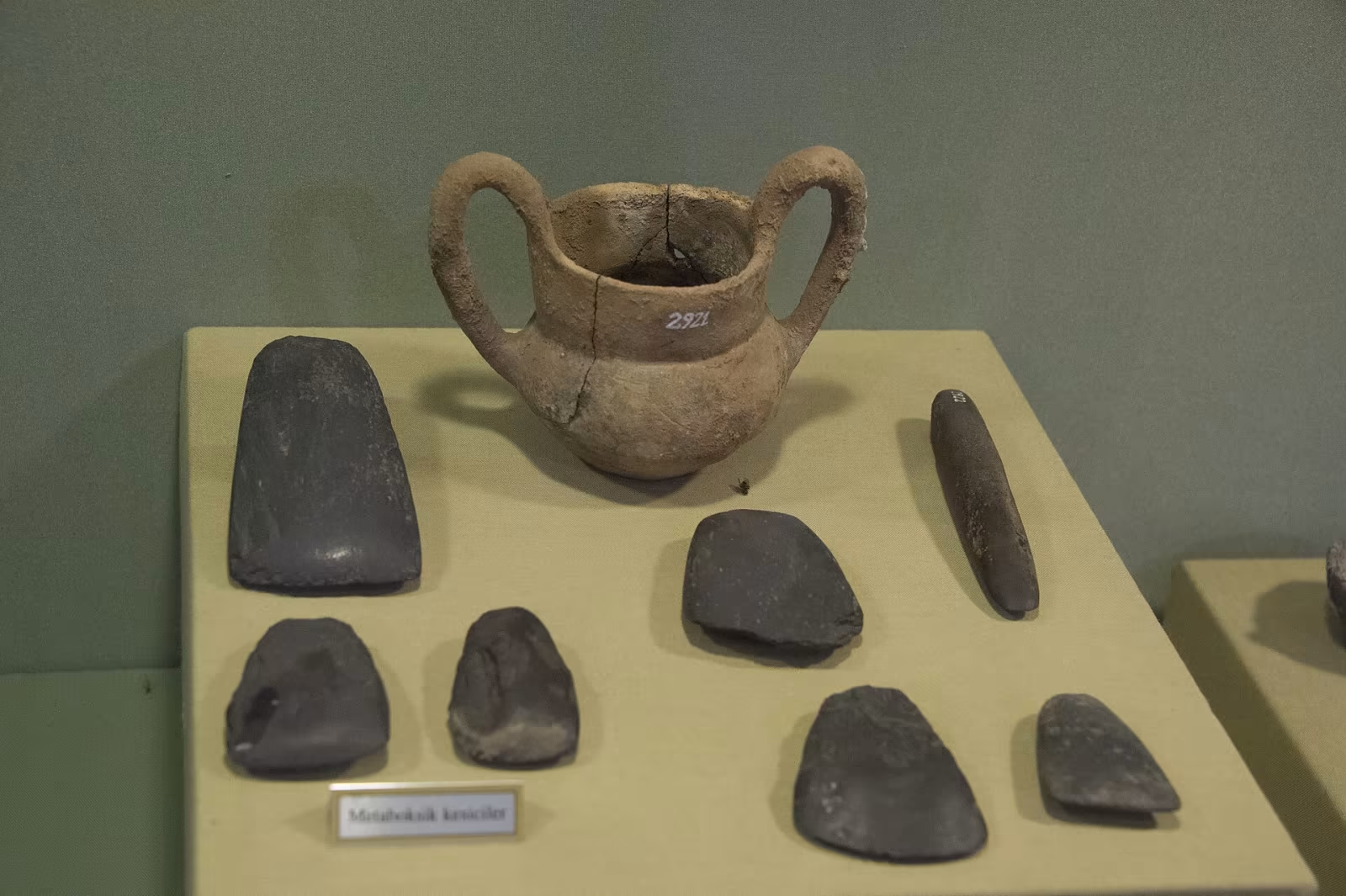
Sidyma was a town of ancient Lycia, located on the southern slope of Mount Cragus to the northwest of the mouth of the Xanthus, within the borders of modern-day Muğla Province.
The earliest settlement of Sidyma occurred in the Iron Age. The city was mentioned in the 1st century BC by Alexander Polyhistor, and later by Pliny the Elder, Stephanus of Byzantium, the Synecdemus, and the Notitiae Episcopatuum. The earliest documentation of the city dates from 425 BC, recording its membership in the Delian League.
In 334 BC, Alexander the Great captured the Xanthos district, which included Sidyma. When the Lycian League was first founded in 169 BC, Sidyma was one of its 23 founding cities and was granted the right to strike its own currency. The city flourished significantly during the Roman period.
According to legend, in the 5th century AD, the future Byzantine Emperor Marcian fell ill while on campaign and was cured by the people of Sidyma, later rewarding them. Another version recounts that while resting on a hunt near Sidyma as a simple soldier, he fell asleep and was sheltered by a large eagle, foreshadowing his future rise.
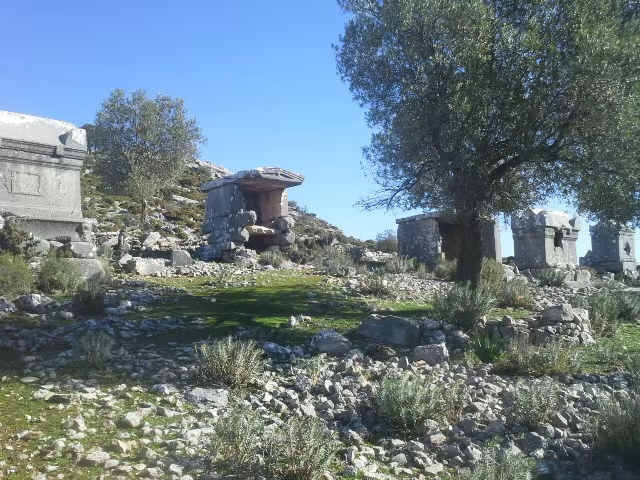
Sidyma has never been officially excavated; thus, historical and archaeological studies have been limited to visible surface ruins. Heavy tree cover and contemporary habitation have presented obstacles to excavation. Most visible structures date to the Roman period, alongside a few remains from the Classical Lycian period and Byzantine churches.
Discovered by Charles Fellows, the acropolis features the remains of a diminutive yet beautiful theatre, an agora, temples, city walls, and a gateway. An inscription shows that the agora's stoa was dedicated to Emperor Claudius and purchased by his doctor Epigapos and son Levianus. Additional structures include a people's assembly, a sebasteion dedicated to Quintus Veranius, gymnasium walls, and a Roman bathhouse with two standing arches.
The most prolific remains are found in the necropolis, featuring about 40 graves dating from the Classical Lycian to the Byzantine period. These include podium-mounted sarcophagi, cliff-cut pigeon-hole tombs reminiscent of Pinara, and rock-cut tombs. A monumental grave with 25 square soffits in its ceiling and the Doric-columned mausoleum of Flava Nanne, an early priestess of the Roman Imperial Cult, reflect the city's high masonry standards.
Sidyma became a Christian bishopric as a suffragan of Myra, the capital of the Roman province of Lycia. Bishop Hypatius signed a letter to Emperor Leo I in 458, Zemarchus attended councils in 680 and 692, and Nicodemus participated in the Second Council of Nicaea in 787. The diocese appeared in the Notitiae Episcopatuum until the 13th century and is listed today by the Catholic Church as a titular see.
The contemporary village of Sidyma occupies the same site, with homes and pathways intricately woven around the ancient ruins. Declared a first-class conservation area by the Muğla Conservation Commission in 2008, Sidyma is also integrated into the Lycian Way, offering trekkers a unique combination of ancient history and local hospitality.
Wikimedia research dossier · Last checked: 2026-09-26 02:59:50